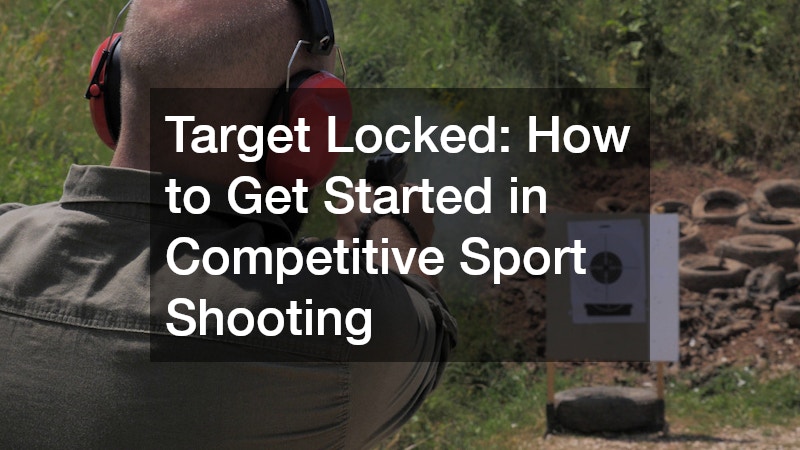
When most people think of competitive sports, they picture muddy cleats, baseline sprints, or crowded gymnasiums. But there is a rapidly growing community of athletes whose sport relies on a completely different set of skills: lightning-fast reflexes, absolute mental fortitude, and mechanical precision. Welcome to the world of competitive sport shooting.
Whether you are looking to sharpen your defensive skills, find a high-adrenaline weekend hobby, or push your focus to its absolute limits, competitive shooting offers an incredibly rewarding outlet. The best part? It is highly accessible.
You don’t need to be an Olympic-level marksman to get started. You just need a willingness to learn, a dedication to safety, and a solid roadmap to guide your first steps.
Here is how to lock your target and break into the sport.
Choose Your Shooting Discipline
Competitive shooting isn’t a monolith; it’s an umbrella term for dozens of unique disciplines. Finding the right one depends entirely on what kind of firearm you enjoy shooting and what style of movement you prefer.
-
USPSA / IDPA (Pistol Sports): These are dynamic, action-oriented handgun sports. You will move through various simulated stages, shooting from behind cover, reloading on the run, and engaging targets at multiple distances against the clock.
-
3-Gun / Multi-Gun: The ultimate test of versatility and agility. Competitors transition rapidly between a rifle, a shotgun, and a handgun within a single stage. It is fast, loud, and incredibly thrilling.
-
Clay Target Sports (Trap, Skeet, and Sporting Clays): If you prefer shotguns, clay sports are a fantastic choice. These focus on tracking and breaking flying clay targets, demanding exceptional hand-eye coordination and consistent stance.
-
Precision Rifle Series (PRS): For the patient, analytical shooter. PRS involves engaging long-range targets (often hundreds of yards away) from various stable and unstable positions under tight time constraints.
Before buying any equipment, it helps to visit reputable gun stores to talk to employees who might participate in these local leagues themselves. They can give you the lay of the land regarding which sports are most active in your specific regional area.
Gear Up Wisely (And Don’t Overspend)
One of the biggest mistakes beginners make is assuming they need thousands of dollars in high-end, specialized gear just to show up to their first match. In reality, almost every shooting discipline has a “Production” or “Factory” division designed specifically for stock, out-of-the-box firearms.
A high-quality gun store will usually steer beginners toward reliable, entry-level production firearms rather than custom-built, thousand-dollar race guns. For example, a standard striker-fired 9mm pistol, three extra magazines, a sturdy belt, and a secure Kydex holster are all you need to compete in an IDPA match. You will also need quality eye protection and electronic ear protection so you can clearly hear the range commands over the gunfire.
Furthermore, handling different models at a brick-and-mortar gun store ensures you find a frame size that actually fits your hands comfortably. You can read online reviews for hours, but you won’t truly know how a trigger feels or how a grip seats until you hold it yourself.
Focus on Safety and Formal Training
In competitive shooting, safety isn’t just a priority—it is the entire foundation of the sport. The rules are strict, and minor violations result in an immediate match disqualification (DQ). Before you ever register for a competition, you need to have the four universal rules of firearm safety hardwired into your muscle memory.
Many newcomers don’t realize that their local gun store often hosts or sponsors basic safety courses and introduction-to-competition clinics. These environments are perfect for asking questions without judgment. Signing up for a class through an established gun store connects you with certified instructors who understand the exact rules of the discipline you want to pursue, ensuring you don’t build bad habits early on.
Connect with the Local Community
Once you have your basic gear and a firm grasp on safety, it’s time to find a match. Websites like PractiScore are excellent for locating local competitions and keeping track of your scores, but nothing beats local word-of-mouth.
If you are having trouble finding matches online, just ask around at the nearest gun store; the local shooting community is notoriously tight-knit and welcoming to novices. Experienced shooters are almost always eager to help a beginner find their footing, share gear advice, and invite them out to the local range for a practice session.
The First Match Mentality
When the day of your first match finally arrives, leave your ego at home. You are not going there to win a trophy or set a world record; you are going there to learn the cadence of the match, understand the commands of the Range Officer (RO), and finish safely.
Once you’ve picked up your starter gear from the gun store, remember that your only goal for your first match should be safety and a finished scorecard. When you stand at the starting line and hear the beep of the timer, take a deep breath. Walk through the stages slowly, focus on your front sight, and soak in the experience. You’ll quickly find that competitive shooting is less about beating the person next to you and entirely about mastering your own focus.